



The Micrographic Surgery and Dermatologic Oncology Fellowship is a fully accredited one-year fellowship program offering comprehensive training in Mohs micrographic surgery, advanced reconstruction, cutaneous oncology, dermatopathology, and multidisciplinary cancer care. The program is based at Dartmouth Hitchcock Medical Center in Lebanon, New Hampshire and includes multidisciplinary educational experiences throughout Dartmouth Health.
Dartmouth Hitchcock Medical Center is a 400-bed tertiary care facility that principally serves the healthcare needs of populations throughout New Hampshire, Vermont, southern Maine, and northern Massachusetts. Fellows have the opportunity to care for a broad panel of patients with diverse diagnoses, advanced cutaneous malignancies, and complex reconstructive needs referred from across northern New England.
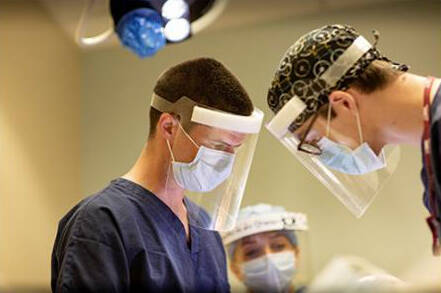
The goal of our fellowship is to prepare Mohs Micrographic Surgeons for careers in academic medicine or clinical practice through advanced training in micrographic surgery, reconstruction, cutaneous oncology, multidisciplinary care, and laboratory management.
Important components of our training program include high-volume Mohs surgery, complex facial reconstruction, frozen section histopathology, multidisciplinary oncology care, laboratory leadership, cosmetic dermatologic surgery, longitudinal patient care, and participation in multidisciplinary tumor boards.
Fellows are full participants in the academic activities of the Department of Dermatology and have opportunities to participate in the teaching of medical students, residents, and rotating trainees.
Welcome to Dartmouth Hitchcock Medical Center
Mission
The mission of the Dartmouth Hitchcock/Mary Hitchcock Memorial Hospital (DH/MHMH) Micrographic Surgery and Dermatology Oncology Fellowship Program is to train specialists in Micrographic Surgery and Dermatologic Oncology to achieve cognitive, technical, and professional skills necessary to provide their patients with kind, compassionate care at the highest level and serve their community and patients as leaders and role models in our specialty.
Program aims
This program aims to:
- Teach the principles of diagnosis, evaluation, and management of skin cancer throughout the year of training.
- Progressively provide in-depth understanding leading to cognitive and technical mastery of all aspects of micrographic surgery, cutaneous reconstructive surgery, cutaneous oncology, and aesthetic procedures required to achieve excellent patient outcomes of the subspecialty.
- Teach the value of multidisciplinary collaboration including when patients can achieve excellent outcomes by combining a team of care specialists. This includes modeling effective approaches of communication with the multidisciplinary team.
- Encourage and foster scientific contributions, process and quality improvement, and leadership within the field of Micrographic Surgery and Dermatologic Oncology.
Goals
To develop fellows who are highly competent in the evaluation and management of patients with cutaneous malignancies by providing education and experience in advanced surgical oncology, reconstruction, laboratory medicine, and multidisciplinary patient care.
Objectives: Patient care
Fellows will develop competency in:
- Obtaining focused and comprehensive histories relevant to cutaneous malignancies and reconstructive surgery
- Performing surgical evaluations and identifying physical findings important for diagnosis, staging, and treatment planning
- Recognizing appropriate indications, contraindications, and alternatives for Mohs micrographic surgery
- Developing differential diagnoses and evidence-based treatment plans for patients with common and uncommon cutaneous neoplasms
- Performing Mohs micrographic surgery with progressive autonomy and demonstrating competency in frozen section interpretation and tumor mapping
- Designing and performing appropriate reconstructions including linear repairs, local flaps, staged repairs, and skin grafting techniques
- Recognizing and managing high-risk cutaneous malignancies including aggressive histologic subtypes, recurrent tumors, and advanced disease
- Participating effectively in multidisciplinary management of patients requiring radiation therapy, systemic therapy, or collaborative surgical care
- Managing postoperative complications, surgical emergencies, and complex wound care
- Developing longitudinal treatment plans that incorporate surveillance, prevention, and ongoing oncologic management