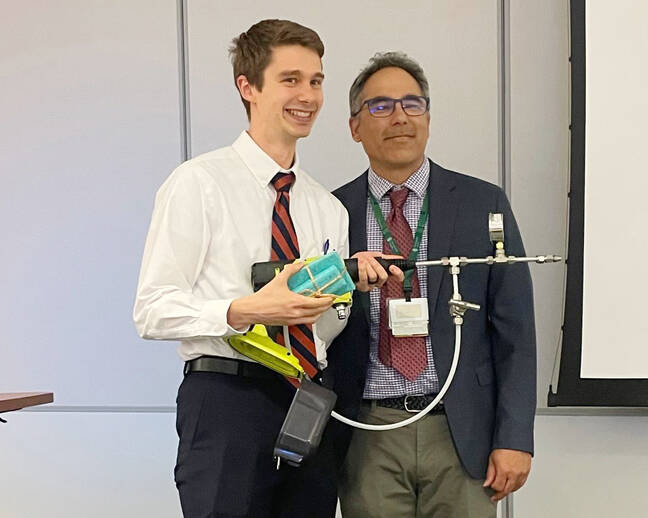



Research is an integral part of ophthalmology training at Dartmouth. Throughout training, residents are encouraged to pursue projects that match their interests, whether in clinical ophthalmology (case reports and chart reviews), surgical outcomes research, medical education, public health and policy, global ophthalmology, imaging, device innovation, and more.
Residents are required to perform 1 short-term personal quality improvement project as well as 1 long-term department-level quality improvement project by the end of their residency. In addition, residents are required to participate in at least one longitudinal research study with a faculty member.
In addition to close mentorship from faculty, residents have access to the broader academic resources of Dartmouth Hitchcock Medical Center, the Geisel School of Medicine, Dartmouth College, and the White River Junction VAMC. There are ample opportunities for collaboration across disciplines and access to biostatistics, pre-medical research fellows, microbiology, and engineering. Specific and unique strengths of the Dartmouth ecosystem include The Dartmouth Institute for Health Policy and Clinical Practice and the Thayer School of Engineering.
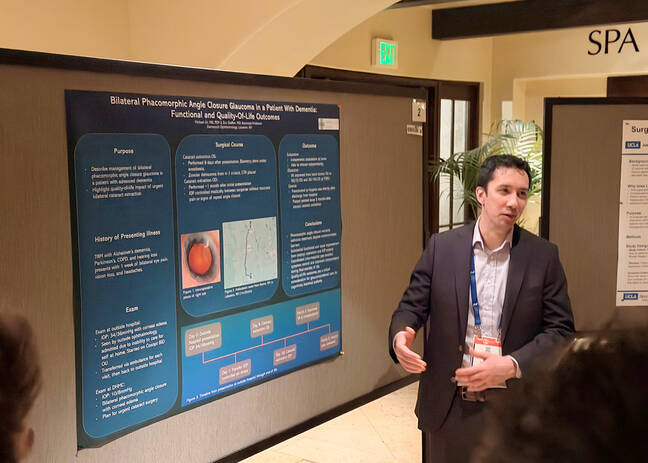
There are numerous opportunities to present research, for which an effort is made to cover travel and registration expenses via dedicated resident education funds ($1500 per year) and other funds with support from the Department of Surgery. Faculty are supportive of resident-led projects funded by national and institutional grants.
Every year, the department hosts the Dartmouth Ophthalmology Research Conference (DORC) for residents and research fellows to present their work. The Department of Surgery hosts a broader research competition called the Surgical Trainees Advancing Research Consortium (STARS). In years past, residents have presented at many regional, national, and international meetings including AAO, ARVO, AGS, ASRS, ACRC, AOCOO-HNS, NEOS, and more.