



Thank you for your interest in our program. As a psychiatry residency program set in a tertiary medical center in rural New Hampshire, we believe we offer an ideal setting to train and live. It was this unique balance of an academic powerhouse set in rural New England that drew many of us to Dartmouth Hitchcock Medical Center. The Upper Valley is a great place to live, regardless of your interests. Home to Dartmouth College, amenities usually restricted to larger cities are easily accessible, such as fine dining, art museums, music, theater, division 1 athletics, and more. If you love the outdoors, look no further; hiking, skiing, swimming holes, and lakes, are all on your doorstep.
The Dartmouth Hitchcock Medical Center residency program offers a collegial and collaborative environment that promotes professional and personal growth. We offer a broad range of clinical training opportunities across several sites, including a tertiary medical center, state hospital, VA medical center, and community mental health centers. We offer advanced neuroscience and interventional psychiatry opportunities, such as ECT, TMS and esketamine, while also emphasizing the importance of psychotherapy. Our faculty are both distinguished and accessible, offering close mentorship and a clear love of teaching.
We are sorry that we cannot show you our program in person, but we hope you take the time to review our website. Please do not hesitate to be in touch with any questions. We look forward to hearing from you.
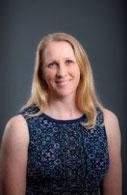
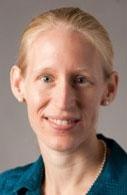
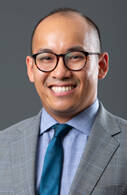
Gillian, Julie and Patrick
Welcome from the Chair
Thank you for your interest in the Department of Psychiatry at Dartmouth Hitchcock Medical Center.
Training at Dartmouth Hitchcock Medical Center is a rich opportunity to learn and grow. As a resident here, you will dive into psychiatry, surrounded by others who are committed to helping you gain expertise in this endlessly interesting and important field. The learning flows from our patients, our skilled, kind, enthusiastic faculty members, and from your remarkable fellow residents.
Our psychiatric residents come with talent then build on it to become strong clinicians and educators. All trainees are also introduced to translational psychiatric research and also to quality improvement leadership. Those who become intrigued have many opportunities to build their skills and experience in these areas.
Since we care about people who develop or live with psychiatric illnesses, your training really matters to us - our graduates spread out across the country improving lives over the decades that follow graduation.
We are delighted you are joining us in this important work and look forward meeting you.

William C. Torrey, MD
Raymond Sobel Professor and Chair, Department of Psychiatry, Dartmouth Health and Dartmouth’s Geisel School of Medicine
Welcome from the Chief Residents
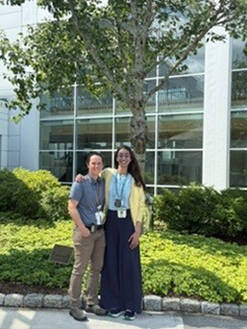
Hello prospective applicants!
We are the co-chiefs for the 2026-2027 academic year and we are delighted you have taken an interest in our program! A little bit about us – Hara is originally from Massachusetts and has interests in community psychiatry, adult outpatient psychiatry, and eating disorder treatment. Eileen also is from Massachusetts and is interested in adult inpatient psychiatry, addiction psychiatry (she recently applied for addiction fellowship!) as well as educational leadership.
Residents are drawn to Dartmouth Hitchcock Medical Center for many reasons, but foremost are the people that make up our program. We are lucky to have excellent faculty that truly enjoy teaching, mentoring, and learning alongside residents. Our culture is one that both supports and challenges residents to grow as clinicians, educators, researchers, and people. Central to this is the program’s commitment to soliciting resident feedback and incorporating changes into all aspects of training—from didactics to call schedules.
During our time in residency, there have been several changes to our program and the hospital itself. We expanded and renovated our adult inpatient psychiatric unit and opened an adolescent unit tailored to care for medically complex patients. We have also recently gained an additional resident space each year, bringing our PGY classes to ten residents per year since 2025. In combination with program leadership, we have made changes to our didactics to incorporate more critical topics, changed our emergency psychiatry rotation to decrease call burden for residents, shifted rotations to have earlier exposure to electives, and more.
In an environment in which creativity is celebrated and all residents have the ability to make change, we have repeatedly been amazed by the work of our co-residents, who have started a Transgender Outpatient Consultation Clinic (which is now a core part of PGY-3 training), developed a therapeutic chatbot, created a Psychiatric Post-Acute COVID Syndrome Clinic, assisted in the creation of both an Asylum Clinic and a PANS/PANDAS Clinic, published in Nature, and worked to develop a more robust diversity, equity, and inclusion curriculum.
Psychiatry is a worthy and increasingly needed specialty. We are incredibly fortunate to be able to provide such a valuable resource to our community through not only excellent care but kindness, empathy, and hope. These values have drawn many of us to Dartmouth for training and have kept many prior residents here after graduation. Please feel free to reach out to either of us if you have questions about your incoming interview, what it is like to be a resident here, or how it is living in the Upper Valley!
Warmly,
Hara Blanas and Eileen McGarry