



Director's welcome
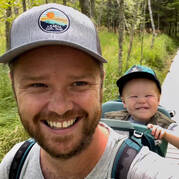
No two days. No two patients. No two careers.
From mountain rescues to Level 1 trauma. From Bhutan to the Upper Valley. Emergency Medicine the way it was meant to be practiced.
Thank you for your interest in the Dartmouth Hitchcock Medical Center Emergency Medicine (EM) Residency Program. I lead a program built for physicians who are drawn to the edges of the specialty, not just the center of it - from the wildest corners of the White Mountains, to flight medicine with a HEMS crew, to international EM training in the Eastern Himalayas, to the most complex resuscitations in northern New England. Most programs give you a version of what emergency medicine can be. In three years, we give you access to the whole thing.
Our patient acuity rivals that of any inner city: our case mix is the second-highest in New England and in the top 5% nationally. We are New Hampshire’s only Level 1 Trauma Center, and our admission and critical care rates are more than twice the national average. Our residents work alongside six dual-boarded EM & Critical Care Medicine faculty across the ED and ICUs (Neuro, Medical, Surgical, and Cardiac). You will not be waiting for sick patients. They will find you.
And yet what surprises most of our residents isn’t the acuity, it’s the breadth. Our clinical spectrum spans tertiary care at Dartmouth Hitchcock Medical Center, urban pediatric EM and trauma at The Elliot Hospital, rural community EM at Cheshire Medical Center, critical access EM at Alice Peck Day Hospital, and rural healthcare delivery via telemedicine and DHART aeromedicine across Northern New England. Rich longitudinal curriculums in Point-of-Care Ultrasound, Wilderness and Austere Medicine, Global Health and EMS round out a genuinely rare range that we are proud of.
That rigor is balanced with real support. In three years, residents complete 22 weeks of critical care EM training (MICU, SICU, Neuro ICU, PICU/ICN), 8 weeks of trauma across two distinct environments (rural/academic at Dartmouth Hitchcock Medical Center, urban/community at Elliot), 8 weeks of elective time, and 4 weeks of protected vacation. Plus, graduated training roles (RESUS and PAR3 shifts) and subspecialty tracks in critical care, HEMS/EMS, wilderness medicine, ultrasound, global health, healthcare administration, and medical education. Our clinical tools keep learners curious and reminds us that EM is one of the most adventurous callings in medicine.
With only six residents per year, faculty know your name on day one and your goals by month three. I’ve spent six years as a nocturnist by choice, because the overnight paired shift (one attending, one resident) shows you exactly where a resident’s reasoning is sharp, where it’s shaky, and where one more hard case is what turns competence into confidence. That kind of individualized attention is what we build this program around and it extends beyond the clinical environment. We foster a culture in EM where people are genuinely kind to each other. The Upper Valley is a small, tight-knit community, and that spirit runs through everything we do here.
Come for a rotation. Walk the trails behind Dartmouth Hitchcock Medical Center. Meet the residents and faculty who chose this place on purpose. You will immediately recognize what makes Dartmouth Health special.
John Moeller, MD, MHA, MS
Program Director, Emergency Medicine Residency
Chair's welcome
Thank you for your interest in Dartmouth! For over a decade, our program has been well-known for its unique mix of high-quality academic preparation and clinical training in a region that is renowned for its remarkable standard of living. But what is even more unique, and harder to capture in words, is the comradery and sense of community that imbues our program.
As the only academic medical center (AMC), level 1 trauma center and flight program in the state, our admission rate and case-mix index rival those of more urban academic centers, but unlike most other AMC’s the population we serve and the outlying physicians we support are decidedly rural, and we are unusually dependent on each other. In addition, unlike many other highly-regarded academic centers, at Dartmouth our residency is the cornerstone of our department. Research, fellowships, undergraduate medical education, ED administration, health policy, etc., are all important considerations, but clinical care and residency training are our primary missions.
Finally, our small size (just six residents per year) allows our talented and dedicated faculty to get to know and support each of our residents as they figure out not only how to care for patients but also how they can excel over the course of their career.
I hope that you will seriously consider joining us at Dartmouth, where we are dedicated to you becoming an exceptional emergency physician and to you achieving your fullest potential.
Scott W. Rodi, MD, MPH
Chair, Department of Emergency Medicine
We are changing the face of emergency care in our region. The full breadth of Emergency Medicine is here, tucked away in beautiful New England. Explore our website for more information or better yet, come for a rotation.
If you have any questions, feel free to contact our program coordinator, Judy Collins, at judith.m.collins@hitchcock.org or 603-650-7317.
Program mission
Our program strives to provide individualized training to enable residents to flourish in their chosen setting, enriching minds through a nimble, rigorous, and modern curriculum, and nourishing character through a respectful, compassionate, and diverse community.
Program aims
Given the number of critical access hospitals in our region and our rural location, the aim of the Dartmouth Hitchcock Medical Center Emergency Medicine Residency program is to change the face of emergency care in the entire region of northern new england through:
- Resident emergency medicine physicians-in-training providing care to patients at Dartmouth Hitchcock Medical Center and regional affiliated and unaffiliated sites
- Retention of graduates at Dartmouth Hitchcock Medical Center and at other sites in the region